
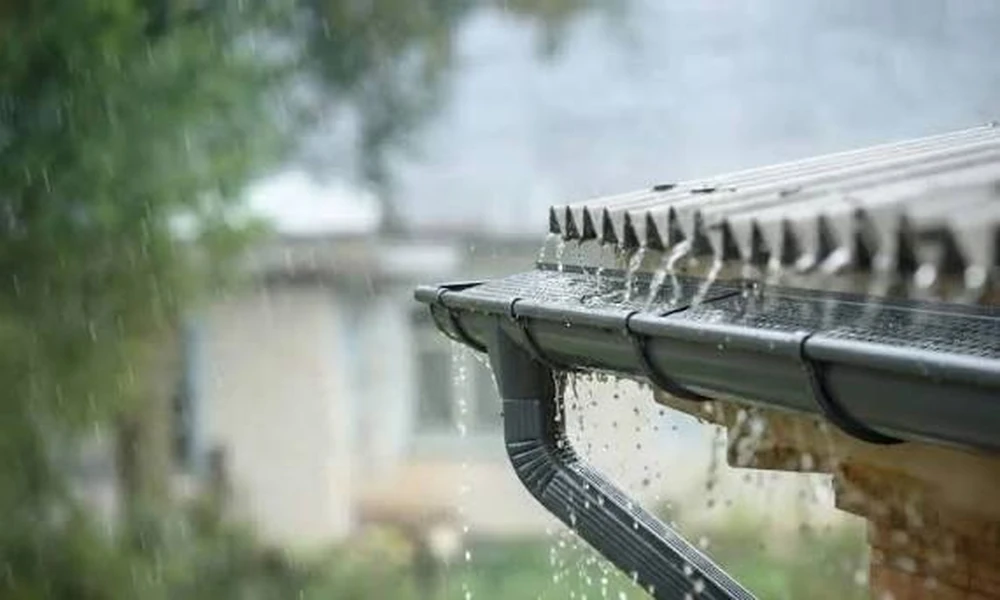
Central Arizona’s high country lives with two wet seasons instead of one. Winter storms bring rain and snow from roughly November into April. Then the summer monsoon arrives with short, violent cloudbursts that can drop more water in twenty minutes than a gentle winter system delivers in a full day. A roof edge has to handle both, and the gap between those two extremes is where many gutter systems start to struggle.
Around Dewey-Humboldt, Prescott Valley and the surrounding Yavapai County towns, a seamless system from a local installer such as The 4 Seasons of Seamless Gutters is typically planned around those extremes rather than an average storm. That matters because gutter capacity is never a single number. It depends on the profile width, how many downspouts drain each run, how large and steep the roof sections are, and whether snow can slide off the panels above.
The clearest way to judge any gutter setup is to watch one summer storm play out against it. After that, it helps to compare what a winter week asks of the same metal.
One Monsoon Afternoon at the Roof Edge
The National Weather Service defines June 15 through September 30 as monsoon season across the Southwest, and its monsoon safety page describes storms that strike suddenly and with real force. For a gutter, that sudden arrival is the whole challenge. There is no slow buildup to warn the system.
Before the First Drop
May and June are usually the driest stretch of the year. Pine needles, juniper debris, dust and loose roof granules settle into gutters during those weeks. Strong outflow winds often race ahead of a storm cell and push even more debris onto the roof.
A gutter that is half full of dried needles has already lost much of its capacity before any rain falls. Clearing troughs and checking that every outlet drains freely in early June is far easier than discovering a clog when water is pouring over the edge.
The First Ten Minutes
As rainfall intensity climbs, water sheets off the roof faster than most homeowners expect. Valleys, where two roof planes meet, concentrate that flow into a short stretch of gutter. On steeper pitches, fast moving water can even shoot past the front lip of a narrow five inch profile.
A six inch profile offers a wider opening and a deeper channel, which helps it catch water that would overshoot a smaller gutter. Splash lines in the gravel below the eaves and dark streaks down the fascia are both clues that overshooting is happening.
Peak Intensity
At the height of a burst, the downspouts usually become the bottleneck. The gutter itself may have room to spare, but if the outlets cannot drain fast enough, water backs up and spills over. A 3×4 downspout has roughly double the opening of a standard 2×3, so upsizing or adding an outlet often solves overflow without replacing the gutter at all.
These signs suggest a system was overwhelmed at peak flow:
- Water pouring over the front lip midway along a long run, which usually means the run needs another downspout
- Overflow at inside corners, often right where a roof valley feeds in
- Bare soil or small craters at the base of a downspout
- Staining behind the gutter on the fascia board, a hint that water is running between the gutter and the house
After the Cell Moves On
Once the storm passes, the question becomes where all that water went. Decomposed granite and rocky soils common around the Prescott area can erode quickly when a downspout dumps directly beside a foundation. Extensions, splash blocks and buried drain lines carry water a safer distance from the house.
Many Arizona homeowners now send that runoff into planted basins or swales instead, a simple form of passive rainwater harvesting. Rain chains can work beautifully in these spots. They guide water visibly and add character, but they handle less volume than an enclosed downspout during a hard burst and tend to splash, so they belong where a little spray will not cause trouble.
The Other Wet Season
Winter in the 4,500 to 5,500 foot range looks very different. Snow falls, nights drop below freezing, and bright sun returns within a day or two. The NWS Flagstaff office publishes a northern Arizona winter safety page showing how sharply snowfall changes with elevation across the region, and that variation is visible even between neighborhoods a few miles apart.
Metal roofing, popular across rural Yavapai County, lets snow release in heavy sheets. A sliding slab can bend a gutter or pull it away from the fascia entirely. Snow stops mounted on the roof hold that snow in place so it melts gradually and drains through the gutter instead of crashing into it.
Freeze and thaw cycles add another kind of stress. Meltwater running into a shaded north facing gutter can refreeze overnight, and ice adds serious weight to every hanger. Seamless runs help here because they eliminate the joints where expanding ice tends to pry sections apart and start leaks.
The Sun Works on the Wood Behind It
Between storms, high altitude sunlight is relentless. Ultraviolet exposure dries out paint on wooden fascia boards, and peeling paint eventually lets moisture reach the wood. Gutters fastened into softening fascia slowly loosen, sag and pull away.
Metal fascia wrap covers the board with formed aluminum, ending the cycle of sanding and repainting. It also gives new gutters a solid, protected surface to attach to. Checking the fascia condition before installing a new system avoids hanging fresh metal on tired wood.
Matching the System to the House
No single gutter size suits every home in the region. A small single story house with a simple roof and few trees may do well with five inch gutters and standard downspouts. A larger home with steep pitches, several valleys, overhanging pines or a metal roof that sheds snow usually benefits from six inch profiles, larger outlets and snow stops above the eaves.
The best way to evaluate any setup is to watch it during the next heavy storm. Note where water spills, where it pools, and where the fascia stays wet longest. Those observations reveal more about whether a system was sized correctly than any brochure, and they give homeowners clear, practical information to bring to a conversation about repairs or a full replacement before the next monsoon arrives.
